

It is often challenging to identify what is influencing Donald Trump a month into the US and Israel's campaign of military action on Iran.
However, it remains clear he has his attention fixed on the oil markets.
A comment – or tweet – from the US president concerning his intentions used to ignite big swings in prices, as investors leaped on indications the tensions could intensify or conclude.
However, in the last week, traders seem to be growing more wary about the impact of his comments.
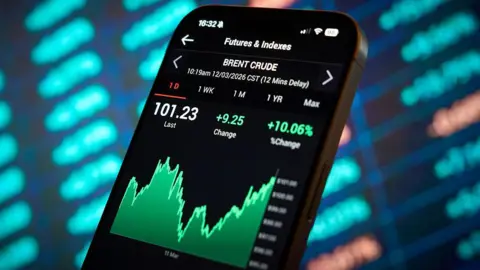
The price of oil was hovering around approximately $72 a barrel (bbl) before 28 February, when the military action against Iran began.
Recently, it climbed to $118 a barrel on 19 March and as of Friday afternoon was sitting at slightly under $112 – markedly higher than its pre-war price.
The following are several examples from the past month where Trump and the financial markets seem to have influenced one another – with differing effects.
Navigate with the navigation button to proceed to the next slide.
"Oil prices have acted as a barometer for wider political and financial risks, surging when Trump's rhetoric becomes hawkish and declining when his rhetoric de-escalates," notes one investment manager.
He continues that markets are appropriately attuned to those cues, considering the big macroeconomic threats that accompany rising oil prices.
"Investors are trying to evaluate genuine uncertainty," he comments. "The markets can look jumpy or uncertain, but what they're really doing is navigating event risk in live, with oil sitting right at the core of that."
But, it can be tough for investors to figure out how to position themselves, particularly because some of Trump's statements appear designed to moving oil prices, instead of articulating official strategy, says another investment advisor.
"As they say, the initial victim of conflict is clarity," he observes. "My belief is much of the rhetoric trading of statements around productive talks, and the contrary, very much are aimed at merely moving the price of oil."
Investor Response Become Increasingly Tempered
On a recent Thursday, minutes after US equity markets recorded their sharpest fall since the start of the Iran war, Trump stated negotiations with Iran were going "quite positively" and he was delaying military strikes on Iran's energy infrastructure until at least 6 April.
But, the price of crude continued to rise.
One currency strategist says that market reactions are "becoming more muted" because of the "significant disconnect" between Trump's reassurances and the absence of acknowledgement from Tehran.
"In light of the current situation, a large number of market watchers do not foresee an early resolution to the conflict and markets continue to be apprehensive."
Another investment director notes markets have also grown used to Trump "repeatedly changing tack at signs of political, equity market or financial stress".
"There is a degree of wariness, or even outright suspicion, taking hold at the edges," he says.


